What Zygoma Implants Are and Who They Help
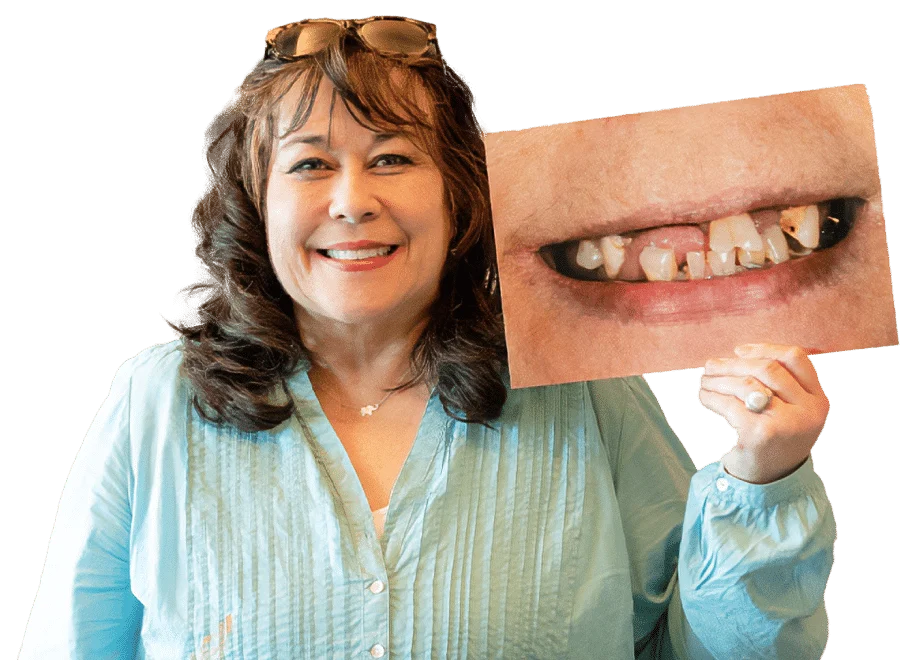
If a dentist has told you that you don’t have enough upper-jaw bone for dental implants, it can feel like a door has closed. Zygoma implants are one way to open it again. Instead of anchoring in the upper jaw, these longer implants anchor in the zygomatic bone, your cheekbone, which is dense and tends to stay strong even when the jaw above your teeth has thinned.
The technique isn’t new. Zygomatic implants have been used since the 1980s, when they were developed in Europe for people with severe bone loss. A peer-reviewed article in the Journal of Maxillofacial and Oral Surgery describes zygoma implants as an evidence-based surgical and prosthetic solution for rebuilding function in the atrophic posterior maxilla, and notes that they avoid grafting and sinus lift procedures.
So who are they for? Typically, adults who have lost significant upper-jaw bone after years of missing teeth, long-term denture wear, gum disease or past infections, and who were told standard implants weren’t possible. Many of these patients are tired of loose dentures, a short list of foods they can eat, and a smile they hide. If that sounds like you, a consultation and a 3D scan can show whether your cheekbone offers the support you need. Not everyone is a candidate, and an honest evaluation is the first step.
Zygoma Implants vs. All-on-4 and Bone Grafting
Think of these as three different answers to one question: how do we give you a secure, fixed set of upper teeth?
All-on-4 and all-on-X place a full arch of teeth on a small number of implants, often four, sometimes more, anchored in the jawbone you already have. When there’s enough bone, this is often the most direct path. It’s a core approach at our practice, and you can read more about the options and pricing for different implant types if you’re comparing.
Bone grafting rebuilds the missing bone first, so standard implants can go in afterward. The catch is time. One practice notes that grafting commonly takes 6 to 9 months, sometimes longer, before implants can even be placed. That means more procedures, more healing and a longer wait for teeth.
Zygoma implants skip the rebuild. Because they anchor in the cheekbone, they can often be placed without grafting, and in many cases the replacement teeth can be attached much sooner. In practice, zygoma implants are often paired with standard implants in the front of the mouth as part of a full-arch plan, so the line between "zygoma" and "all-on-X" is blurrier than it first appears.
The tradeoffs are worth knowing. Zygomatic implants carry a slightly higher risk of complications such as sinusitis than implants placed in the jawbone, and fewer providers have the training to place them. For a patient with enough bone, all-on-4 is simpler. For a patient with significant bone loss, zygoma implants can spare a long grafting journey. If you’re also wondering whether dentures anchored on implants make sense, our guide to dentures with dental implants walks through that option.
Understanding the Cost and Why Quotes Vary
If you’ve searched for zygoma implant pricing, you’ve probably noticed that the numbers don’t agree. That’s not your imagination. Published figures swing wildly depending on the source:
- CareCredit cites a national average of $3,918, with a range from $3,018 to $7,357, which appears to describe a single implant rather than a full treatment.
- Practice websites quote far higher totals for a full arch: $12,000 to $30,000, $18,000 to $24,000, $25,000 to $45,000 per arch, and $30,000 to $60,000 or more.
Why such a spread? Scope is one reason: a quote might cover only the surgery, or it might include temporary teeth, the final permanent restoration, imaging, sedation and follow-up visits. The case itself is another, since one patient may need two zygoma implants plus several standard ones while another needs a different combination. Provider skill matters too. Pages across the board attribute the premium to specialized training, careful planning and the small number of clinicians who place these implants. And treating one arch versus both changes everything.
The practical advice is to ask any provider for an itemized treatment plan and compare like with like. A lower number that leaves out the final teeth isn’t actually lower.
Most dental insurance plans do not cover the full cost of zygomatic implants, so ask your insurer what portion, if any, applies. Many patients bridge the gap with payment plans, and our comparison of dental implant financing options lays out how those work. For a local view of pricing, see how much implants cost in the Seattle area.
What Recovery Looks Like, From Healing to Full Integration
Recovery usually happens in two stages, and keeping them separate makes the timeline less daunting. Initial healing typically takes a few weeks, while full integration, when the implant fuses with the surrounding bone, may take several months.
In those first weeks, expect some swelling, mild bruising and tenderness, which your dentist can manage with prescribed medication and simple at-home care. Soft foods are the rule early on. You’ll be asked to avoid pressure on the area, skip smoking and keep your mouth clean with gentle rinsing as directed. Because these implants travel closer to the sinus, some patients notice nasal stuffiness or minor sinus symptoms for a short time, so report anything that seems to linger.
Many patients leave with a set of temporary teeth, so you aren’t without a smile while the bone integrates. Once integration is complete, your final teeth are made and placed, and that’s when the full benefit of a stable, fixed bite arrives.
On long-term results, practice websites claim success rates of roughly 97% to 99%, but those are marketing figures, not independent statistics. The research does support the technique, though a single small study isn’t a promise about your outcome. Your own bone, general health, hygiene habits and follow-up care all influence how well your implants do.
Comfort, Sedation and Choosing the Right Provider in Washington
A longer, more involved procedure understandably makes some people nervous. If dental anxiety is part of your story, you’re far from alone, and comfort planning should be built into your treatment from the start. Sedation dentistry can let you relax through surgery, and a gentle, unhurried team makes a real difference to how the experience feels.
When choosing a provider, a few concrete criteria matter more than any marketing claim:
- Experience with complex cases. Ask how often they place zygomatic implants or manage full-arch cases involving severe bone loss, and ask to see examples.
- Planning with 3D imaging. A careful scan of your cheekbone and sinus anatomy is essential to a safe plan.
- A clear, itemized quote. It should spell out surgery, temporary teeth, final teeth, sedation and follow-up.
- Honest candidacy advice. A good provider will tell you if all-on-4 or another route suits you better, rather than steering you toward the most expensive option.
- One coordinated team. Having surgery, restoration and ongoing care under one roof means fewer handoffs and a more consistent experience.
Here in Washington, look for a practice with a long local track record. Dr. Lance Timmerman has cared for Seattle-area patients since 1998, and you can learn more about dental care with Dr. Timmerman in Tukwila. If your goal reaches beyond function to a whole new look, a full-arch restoration is often part of a bigger smile makeover, and your team can talk through how the pieces fit together.
The best next step is simply a conversation. A consultation costs you little, and it can turn "you’re not a candidate" into a clear plan.