What Dental Implants Cost Before Financing
Before you compare dental implants with financing options, get a clear sense of the number you’re actually financing. A single implant, which includes the post, the abutment and the crown, typically runs between $3,000 and $6,000, with a national average of about $4,507 according to published cost estimates. Where you live matters, and so does how many teeth you’re replacing. One tooth is a very different commitment from a full arch, which is commonly quoted in the tens of thousands of dollars per arch.
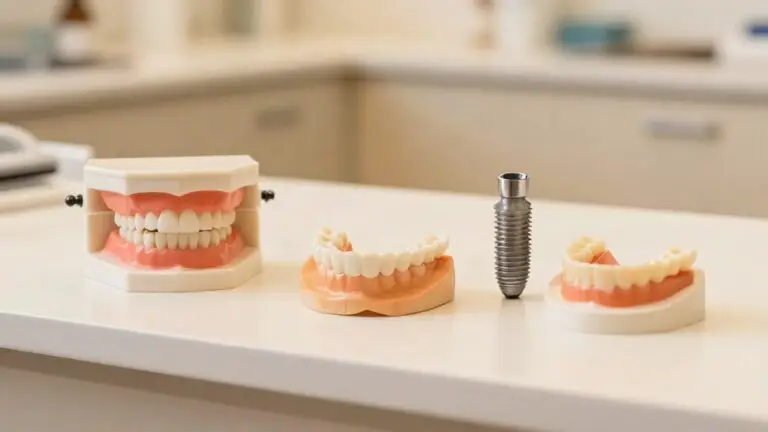
An implant is also several pieces of care, not a single purchase. The post that sits in the jawbone, the abutment that connects it, the crown you see, the surgical placement, and the consultation and imaging all add to the total. Some of those costs land at different points in treatment, which affects how you pay and, as we’ll see, how your insurance counts them.
Insurance can narrow the gap, though rarely by as much as people hope. Delta Dental of Washington’s own worked example shows an in-network implant plus crown averaging $4,200, against $5,560 charged without insurance, according to its open enrollment FAQ. That’s a real difference, but it comes from contracted rates and network pricing, and it still leaves a large balance to cover.
So start here: financing doesn’t lower what an implant costs. Choosing dental implants with financing spreads the cost over time, and sometimes adds to it. Once you know the sticker price, and the price after any insurance, you have a baseline for judging every offer you see.
Financing Options Compared: Loans, Plans and Credit
Most patients who choose dental implants with financing pick from a handful of routes, and each has its own personality. Think of them as tools rather than rankings. The right one depends on your credit, your timeline and how much predictability you want.
In-house payment plans are arrangements made directly with the dental office. They tend to be the simplest, since one place handles both treatment and billing. Their standout trait is flexibility, because the practice sets the terms rather than a bank. They work best for patients who want a straightforward schedule and would rather talk to a person than navigate an application portal. Terms vary widely from office to office, so ask what’s offered instead of assuming.
Healthcare credit cards and healthcare lenders are built for medical and dental bills. They’re quick to apply for and often come with promotional periods, which is appealing when you want to start treatment soon. Their standout trait is speed. They suit patients who are confident they can clear the balance within the promotional window, and less so those who may need longer. The fine print on those promotions deserves close attention, and we cover it below.
Personal loans from a bank or credit union are best for patients with solid credit who want a fixed rate and a fixed end date. Their standout trait is predictability: you know the payment and the payoff date from day one. Because the funds arrive as cash, you can also pay the dental office up front, which sometimes gives you room to negotiate.
Lines of credit and borrowing from family or friends sit at the flexible end. A line of credit lets you draw only what you need, while a family loan can carry little or no interest. Both suit people who can manage an open-ended arrangement responsibly.
HSA and FSA funds deserve a mention because they stretch your dollars with tax advantages. They work best for patients whose accounts are already funded. Ask your plan administrator exactly what qualifies and when you must use the money, since the rules differ by account.
Whichever you lean toward, don’t let the monthly payment be your only yardstick. A low monthly figure can hide a long term or a high interest rate. The better comparison is the total you’ll repay, which we come back to when we talk about choosing.
Insurance, Waiting Periods and Benefit Timing
Plenty of people assume dental insurance will cover an implant the way it covers a cleaning. In practice, most plans file implants under "major services," typically paid at around 50%, according to this cost guide. Even then, there’s usually a deductible, and the plan pays based on its own allowed amount rather than whatever the office charges.
The annual maximum is often the bigger constraint. Most plans cap yearly benefits at $1,000 to $2,000, and that cap covers all of your dental work for the year, not just the implant. If you need a filling or a crown elsewhere, that spending draws from the same pool. A 50% benefit on a roughly $4,500 implant can shrink fast once the cap kicks in, leaving most of the cost to you.
Waiting periods are the other trap. Six to twelve months is common for implants. Forbes Advisor’s review of plans notes, for example, a six-month wait on one carrier and a twelve-month wait on another. Some plans also treat a tooth that was already missing before you enrolled as a pre-existing condition and exclude it. If you’re shopping for a plan because you need an implant, read the waiting period and missing-tooth language before you sign up.
If you do have coverage, two moves are worth knowing. First, ask for a predetermination. Delta Dental of Washington encourages patients to have the dentist submit one before major work, so you see an estimate of what the plan will pay before you commit. Second, some dentists point out that because implant treatment happens in stages, the timing can sometimes be arranged to use benefits from more than one plan year. Whether that works for you depends entirely on your plan’s rules, so confirm it with your carrier and the office rather than assuming.
Older patients should know that Original Medicare (Parts A and B) does not cover dental implants. Some Medicare Advantage plans include dental benefits, but these vary by plan and area, so check your own policy for details.
No Credit Check Offers and Deferred Interest Risks
If your credit is limited or damaged, "no credit check" financing can sound like the answer. Before you lean on it, understand what the phrase usually means. In one review of eight financing providers, only one advertised no credit check at all, and seven used a soft check. A soft check generally doesn’t affect your credit score, but it’s still a check, so many "no credit check" offers are really "no hard pull" offers.
More important, skipping a credit check doesn’t make treatment cheaper. When a lender takes on more risk, that risk is typically priced in through higher interest, shorter terms, or both. An easy approval can therefore carry a steeper total cost than a loan you had to qualify for. If one of these offers appeals to you, ask for the full repayment amount in writing, not just the monthly payment.
Deferred-interest promotions carry their own caution. These offers advertise something like "no interest if paid in full" within a set period. The risk is that if any balance remains when the period ends, interest may be charged retroactively from the start, depending on the terms. That structure can turn a manageable plan into an expensive one if a payment slips or the final balance is larger than expected. Read the agreement closely, and ask the lender to explain exactly what happens if you don’t clear the balance in time. Lending rules and consumer protections change, so it’s also wise to check current guidance from a source such as the Consumer Financial Protection Bureau before you agree to anything.
None of this means these products are bad. They reward careful, disciplined payers and can penalize anyone caught off guard by the terms.
How to Choose and Confirm Costs at South Seattle Smiles
Choosing dental implants with financing comes down to a few concrete questions. Start with the total repayable cost, meaning everything you’ll pay across the life of the arrangement, including interest and fees. Then look at the term: how long you’ll be paying, and whether you’re comfortable with that. Next, consider how predictable the payment is, and whether the terms change if something goes wrong. Finally, check whether the option affects your credit, and whether an upfront application is worth the speed it offers.
A simple way to compare is to line up each offer on the same total number. A 0% promotional plan you’ll clearly pay off in time can beat a loan, while a longer loan with a low fixed rate may beat a promotion you might miss. Your own cash flow, credit and discipline decide which one wins.
At South Seattle Smiles in Tukwila, the team can walk you through your options once you know what treatment you need. Dr. Lance Timmerman, DMD, and the practice offer a full range of dental implant care, and the first step is a consultation to understand your plan and give you a clear picture of cost. Financing partners, in-house plan terms and insurance acceptance can all change, so please confirm the current details directly with the office rather than relying on this article.
A few questions will save you time when you call. Ask which financing options and payment plans the office offers and what their terms are. Ask whether we work with your insurance, and request a predetermination so you can see what your plan expects to pay. Ask what your out-of-pocket total will be, broken into the stages of treatment, so you can plan each payment. With those answers in hand, you can compare real numbers instead of estimates and choose dental implants with financing that fits your budget and your comfort level.