Single-Tooth Implant Cost: What the Total Includes
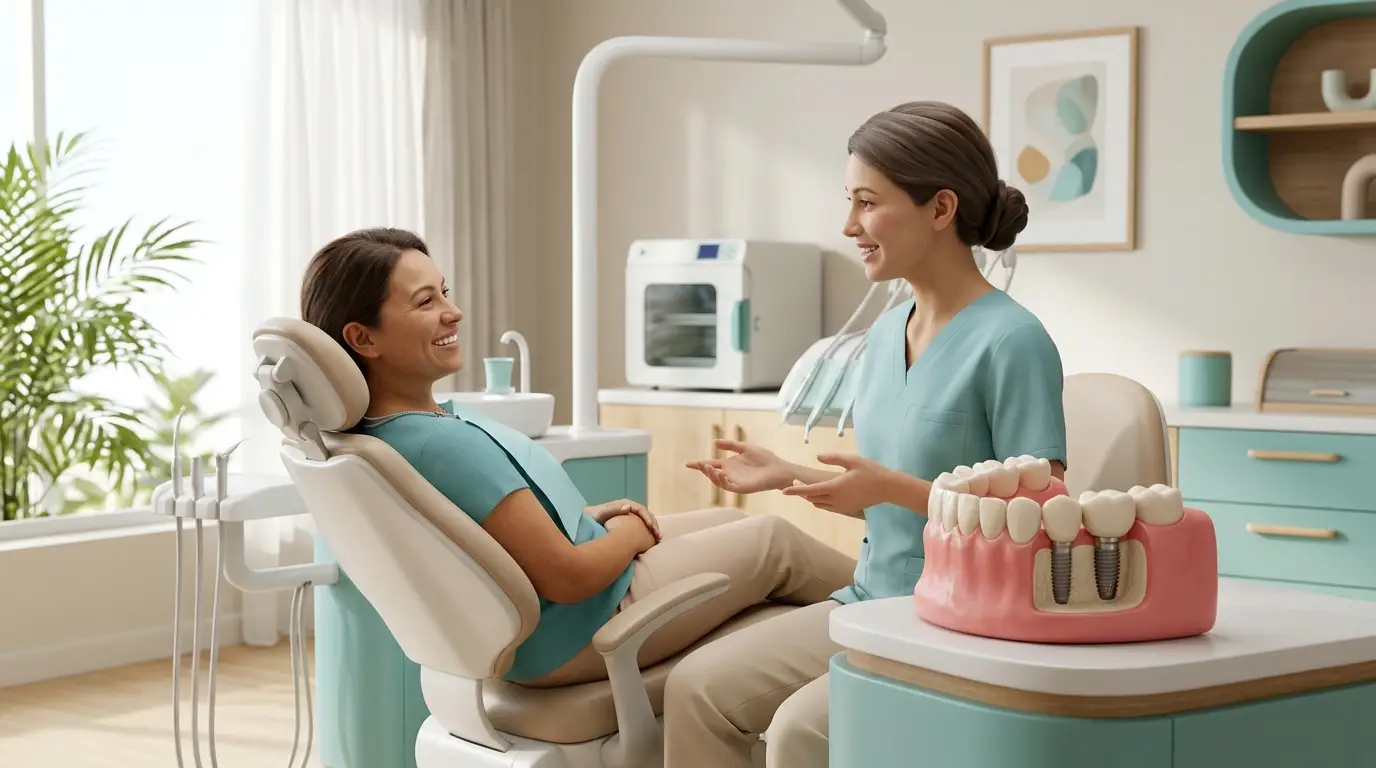
If you’re searching for types of dental implants cost, start with the single-tooth implant, because every other option builds on it. A complete single-tooth implant has three parts: the titanium post that sits in the jaw, the abutment that links the post to the tooth, and the crown you actually see. MetLife puts a typical total at $3,000 to $6,000, split roughly into a post at $1,000 to $3,000, an abutment at $500 to $1,000 and a crown at $800 to $3,000 (MetLife). Delta Dental’s cost-without-benefits estimate, drawn from claims data for out-of-network dentists, runs a little lower at $2,800 to $5,600 (Delta Dental).
You may also run into a far lower number online. CareCredit lists a national average of $2,143 for a single implant, but that figure leaves out the crown, and crowns add anywhere from $488 to $3,254 depending on the material (CareCredit). That gap is the main reason published prices seem to contradict each other. One source is quoting the post; another is quoting the finished tooth.
Some patients need extra steps before the implant can go in. They aren’t part of every case, but it pays to ask about them up front:
- A consultation and 3D imaging scan
- Removal of a damaged tooth, if one is still in place
- Bone grafting, if the jaw has lost volume
- A sinus lift for some upper back teeth
- Sedation, if you feel anxious about treatment
Any of these can shift the final figure, and a clear estimate will tell you which ones apply to you rather than burying them. Location matters too: molars generally cost more than front teeth because they take more force and sometimes need extra preparation. Material plays a part as well. A zirconia crown or a zirconia implant usually costs somewhat more than titanium.
All-on-4 and All-on-X Full-Arch Costs Compared
When most of an arch is failing or missing, replacing teeth one at a time stops making sense. That’s where all-on-4 and all-on-X come in. The all-on-4 technique anchors a full set of teeth on four implants, using the denser bone at the front of the jaw and angling the rear implants to steer clear of the sinuses and nerve canal (Wikipedia). All-on-X follows the same idea but uses more implants, often six or more, when the bone and bite call for extra support.
Pricing for these types of dental implants cost is wide, and honest sources admit it. Wikipedia notes that cost depends on the replacement teeth themselves: acrylic over a titanium bar runs about $30,000 per arch, while zirconia is $36,000 to $40,000. Treat those as rough illustrations rather than a quote, since the figures are loosely sourced. Advertised "starting at" prices can be far lower, and they often leave out extractions, sedation and the permanent bridge.
That last point deserves attention, because "teeth in a day" doesn’t always mean one visit and one payment. The teeth placed on surgery day are usually temporary, and the final zirconia set arrives months later, sometimes at an extra charge. When you compare estimates, ask directly whether the quote covers:
- The surgery and implants
- Any extractions or bone work
- Sedation
- The temporary teeth
- The final, permanent set
A quote covering all five tells you the real cost. A quote covering only the first is the one that tends to grow. For many people the higher upfront figure is easier to justify next to years of denture relines and replacements. Full-arch treatment is also a bigger decision than a single tooth, so a thorough consultation matters more than a fast price.
Mini Implants, Bridges and Other Implant Types
Not every situation calls for a standard implant, and a few other types of dental implants cost noticeably less. Mini implants are narrower posts, usually priced between roughly $500 and $1,500 each in published guides, and they’re mostly used to steady a denture rather than replace a single tooth. That makes them a reasonable middle path if you want a firmer denture without a full-arch procedure. They aren’t a general substitute for a standard implant, because the smaller post carries less biting force.
An implant-supported bridge replaces several adjacent teeth using two or more implants as anchors, with the bridge spanning the gap. It usually costs less than placing one implant per missing tooth, which is why it appeals to people missing two or three teeth in a row. Implant-retained dentures sit between a bridge and a full arch: a handful of implants hold a removable or fixed denture in place, and the price lands between a conventional denture and a full-arch restoration.
CareCredit’s by-type table lists endosteal implants (the standard kind, placed in the jawbone) at $4,344, endosteal with bone augmentation at $5,580, subperiosteal at $2,804, zygomatic at $3,918 and an implant-supported bridge at $5,195 (CareCredit). That page is old, so read those numbers as a historical comparison between types rather than a current price list. What they do show clearly is that needing bone augmentation raises the cost of even a standard implant.
If you’re weighing implants against a traditional bridge or dentures, our guide to teeth dental implants: costs, options and coverage walks through that comparison in more detail.
Why Implant Quotes Differ in Washington
If you’ve collected two or three quotes around Seattle and they look nothing alike, you’re not imagining it. Local figures from aggregators and clinic pages conflict, with averages anywhere from about $3,000 to more than $6,000 for a single implant, and none of them come from an official Washington or federal source. So treat any single "Seattle average" with caution.
Several things explain the spread. The biggest is scope: a post-only price and an all-in price describe different treatments. Next come the extras listed earlier, such as grafting, extractions and sedation, which some practices bundle and others bill separately. Implant brand, crown material and case complexity matter as well. A front tooth in healthy bone is a very different job from a back molar needing a sinus lift.
Quotes can also differ simply because of how a practice is set up. A comprehensive office that handles the surgery and the restoration under one roof can often give you one complete figure, while treatment split across several providers may produce several separate bills. Neither approach is automatically cheaper, but a single estimate is far easier to compare.
Insurance, Apple Health, Medicare and Financing
Coverage is where many people feel the most uncertainty. Dental insurance rarely pays the full amount. MetLife says its PPO plans may cover about 50% for implants, while its HMO plans are more limited and require pre-authorization (MetLife). Most plans also have an annual maximum, so even a 50% benefit can run out fast on a large case. Ask your plan for the specific percentage, waiting period and yearly cap before you schedule.
Public coverage is thinner. Original Medicare does not cover dental implants, with narrow exceptions when dental work is tied to a covered medical procedure. For Washington adults on Apple Health, the state’s adult dental flyer lists implants and bridges under "services that are not covered" (Adult Dental Coverage). That document is dated, so check current Health Care Authority materials before relying on it. For many seniors and Apple Health members, implants will mean paying out of pocket or using financing.
Financing can make the cost manageable. Monthly payment plans, HSA or FSA funds and third-party dental credit are all common, and our breakdown of dental implants with financing compares the main routes. If your plan has an annual maximum that resets, timing treatment around that date can also stretch your benefits further.
How to Choose and Compare Implant Quotes
The simplest way to compare the types of dental implants cost is to ask every office the same questions. Request an itemized, written estimate and check that it states what’s included. Useful points to confirm: whether the price covers the post, abutment and crown; whether imaging, extractions, grafting and sedation are listed separately; and, for full-arch work, whether the temporary and final teeth are both included.
A few other questions are worth raising at a consultation. What material is the crown or prosthesis, and what’s its expected lifespan? How long does healing take before the final restoration? What does the practice do if a post doesn’t integrate? A confident, patient answer to those tells you as much as the price does.
Cost matters, but so do comfort and trust. If dental visits make you nervous, ask about sedation options early, since that’s a real part of both the experience and the price. At South Seattle Smiles in Tukwila, Dr. Lance Timmerman has served the Seattle area since 1998 and offers all-on-4 and all-on-X implants alongside full mouth reconstruction, veneers and sedation dentistry under one roof. When you’re ready to put a real number on your own case, a consultation is the most reliable way to move past the ranges and get a clear, itemized plan.