What Teeth Dental Implants Involve: Post, Abutment and Crown
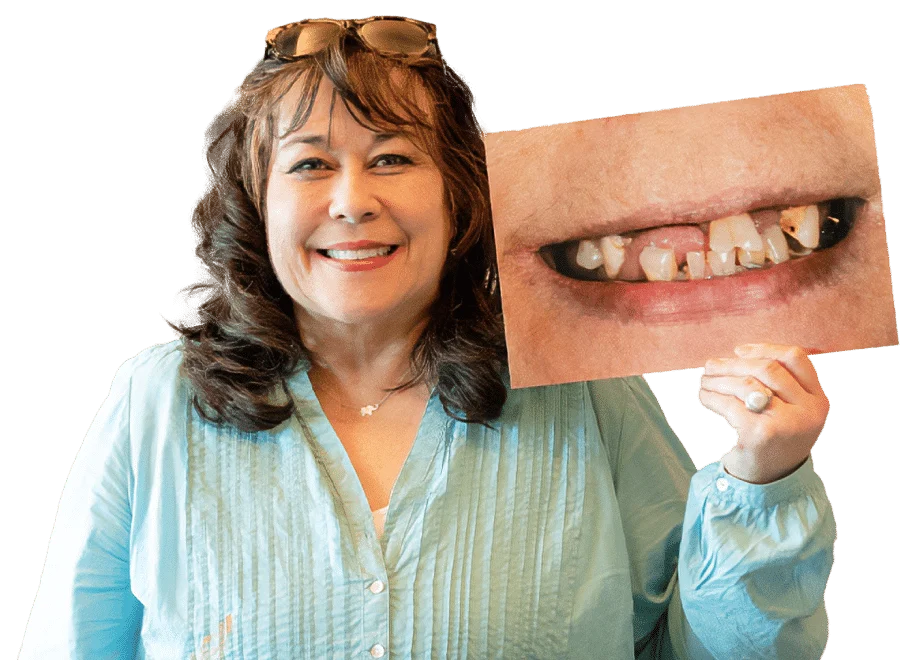
Missing a tooth, or several? Teeth dental implants are the closest thing dentistry has to growing a new one. A denture rests on your gums. A bridge leans on the teeth beside it. An implant replaces the root itself. That’s why so many people choose them, and also why the cost conversation can feel muddled at first.
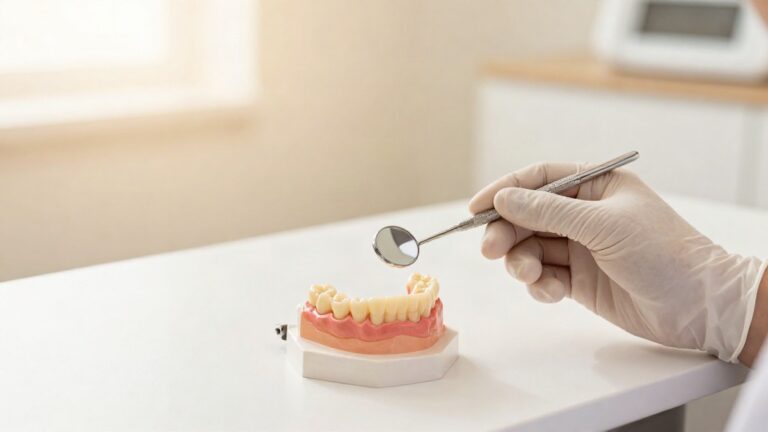
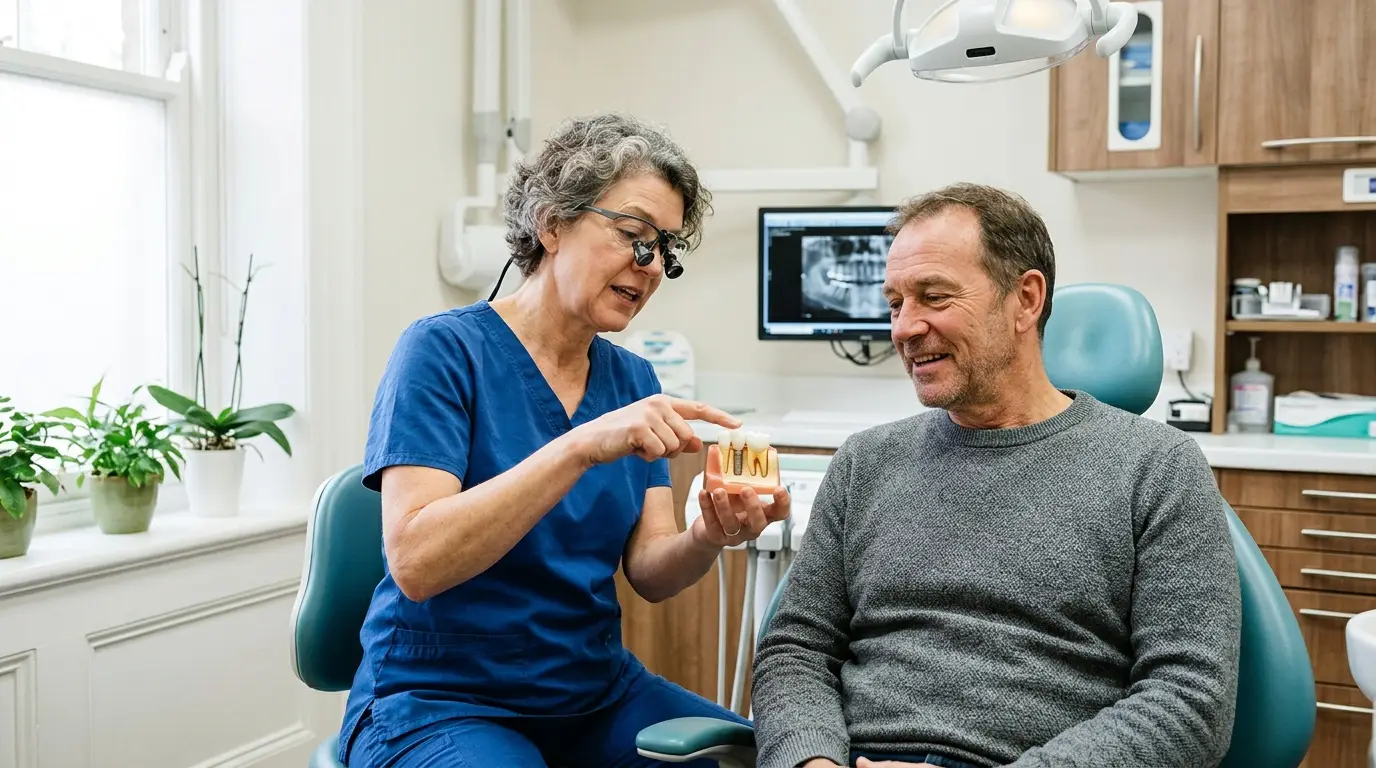
A single-tooth implant has three parts. The post is a small titanium (sometimes zirconia) fixture set into the jawbone, where it slowly fuses with the bone and becomes your new root. The abutment is a connector that attaches to the post and rises just above the gumline. The crown is the visible, natural-looking tooth that fits over the abutment.
Each piece carries its own price. MetLife breaks a typical single implant into roughly $1,000–$3,000 for the post, $500–$1,000 for the abutment and $800–$3,000 for the crown, with a typical total of $3,000–$6,000. Delta Dental, drawing on claims data for out-of-network dentists, puts the cost without benefits at $2,800–$5,600. The ranges overlap, and the gaps usually come down to what each source counts.
Here’s the first thing worth knowing as you compare quotes: a figure of $1,500 to $2,000 often covers only the post. For a fair comparison, ask for the all-in number, with the abutment and crown included.
Some people need groundwork before the post goes in. If the bone is thin, your dentist may recommend an extraction, a bone graft or, for an upper back tooth, a sinus lift. Imaging at your consultation will confirm whether any of that applies, so you’re never left guessing about candidacy. After placement, healing takes time while the post integrates with the bone, and your dentist will walk you through the timeline for your situation.
Single Tooth vs. Full Arch: All-on-4 and All-on-X Options
Replacing one tooth and replacing a whole arch are very different projects. The right answer depends on how many teeth are missing or failing.
For a single gap, one implant with its own crown is the standard approach. It stands on its own, so the neighboring teeth stay untouched. If two or three teeth in a row are gone, your dentist may place implants that support a small bridge, which can mean fewer posts than teeth.
When most or all of the teeth in an arch are failing, the conversation usually turns to all-on-4 or all-on-x. The technique anchors a full set of replacement teeth to a small number of carefully placed implants. As Wikipedia’s overview of All-on-4 describes it, the approach uses the dense bone at the front of the jaw and angles the rear implants to steer clear of the sinuses and the nerve canal. That angling is often what lets people with some bone loss avoid more extensive grafting, though only imaging and an exam can tell you whether it applies to you.
"All-on-X" just means the number of implants is tailored to your jaw. Some people do well with four, others benefit from five or six. At South Seattle Smiles, Dr. Lance Timmerman offers both all-on-4 and all-on-x approaches, and the choice should follow your bone and bite rather than a fixed formula.
Full-arch work is also where the prosthetic material matters. Acrylic over a titanium bar sits at the lower end, while zirconia is stronger, more stain-resistant and more expensive. Maybe you’re weighing a single implant against a full-arch plan, or thinking about pairing implants with a smile makeover using porcelain veneers on your remaining healthy teeth. Either way, a comprehensive exam lets you put every option side by side.
What Drives the Price: Reading Quotes and Teeth-in-a-Day Claims
Two quotes for "the same procedure" can differ by thousands of dollars. The reasons are usually legitimate once you can see them, and learning to read a quote is the best protection against surprises.
Start with scope. Does the number include the consultation and 3D imaging, any extractions, a bone graft if needed, sedation, the abutment, and the final crown or prosthesis? Retail ranges for add-ons vary, but a bone graft, a sinus lift or an extraction can each add meaningfully to the total, and many practices bill sedation separately. Location matters too: molars typically cost more than front teeth, and upper back teeth may need a sinus lift.
Materials and components come next. Premium implant systems and zirconia crowns generally cost more than standard ones, and zirconia implants run a few hundred dollars above titanium. A higher price isn’t automatically better, but you should know what you’re paying for.
Then there are "teeth in a day" claims. The idea is real, since a full arch of teeth can be attached on the day of surgery, and the phrase is certainly appealing. But as one cost analysis puts it, the same-day teeth are almost always temporary, and the final zirconia set comes later, often at extra cost. Advertised "starting at" prices often leave out extractions, sedation and the permanent prosthesis. Published per-arch ranges swing widely, from roughly $14,000 to $40,000, depending on materials and what’s included. Those figures are loosely sourced, so use them to understand the spread rather than to build a budget.
The practical advice is simple: ask for a written, itemized plan that covers the temporary teeth, the permanent teeth and every procedure in between. A transparent practice will gladly provide one. If a price looks dramatically lower than everyone else’s, ask what’s been left out.
Insurance, Medicare and Apple Health Coverage for Implants
Coverage is where many people lose heart, so here’s the honest picture.
Dental insurance sometimes helps, but only modestly. Many PPO plans cover up to 50% of allowed charges, capped at an annual maximum of roughly $1,500–$2,000. Some plans exclude implants entirely, treat them as a major service with a waiting period, or cover only parts of the treatment. Every plan differs, so call your carrier or ask our office to help you verify benefits before you commit.
Medicare is more limited. Original Medicare doesn’t cover dental implants, though narrow exceptions exist when dental work is tied to a covered medical procedure. Some Medicare Advantage plans include dental benefits, but implant coverage varies widely, so read the fine print.
For Washington residents on Apple Health, the state’s adult dental coverage flyer lists implants and bridges under services that are not covered for adults 21 and over. That flyer is dated, so check current Health Care Authority materials to confirm.
If insurance falls short, you still have options. HSA and FSA funds can often go toward implant treatment, and many people spread the cost over time through payment plans. Our guide to dental implants with financing compares the routes. Because implants are built in stages, you can sometimes phase treatment across a plan year so more of your annual benefit works for you.
Choosing the Right Option and Booking a Gentle Consultation in Tukwila
With this many moving parts, the best next step isn’t guessing at a price but getting a personal plan. A consultation lets your dentist examine your gums and bone, take imaging and explain in plain language whether you’re a candidate for a single implant, a bridge or a full-arch approach.
Bone loss is one of the most common worries, and it doesn’t automatically rule you out. Depending on what imaging shows, options may include a graft, a sinus lift or an angled-implant technique like all-on-4. Think of it as a conversation to have, not a verdict to fear.
If dental visits make you anxious, say so at the outset. Sedation dentistry is available at South Seattle Smiles, so a long procedure can feel calm and comfortable. Many patients with dental anxiety tell us the planning conversation was the hardest part, and that once they felt heard, the rest got easier.
When you come in, it helps to ask:
- What is the total, itemized cost, including the final teeth?
- Which add-on procedures, if any, do I need?
- What are my timeline and healing expectations?
- Which of these costs might my insurance or HSA cover?
Dr. Timmerman and the team have served the Seattle area from Tukwila since 1998. They offer everything from full mouth reconstruction to routine checkups under one roof, so your implant plan can fit into your overall oral health rather than stand alone.
If you’re ready to learn what teeth dental implants could look like for you, reach out to South Seattle Smiles to schedule a gentle, no-pressure consultation. You’ll leave with a clear plan, a clear price and the confidence to decide at your own pace.