Restorative dentistry has a language of its own, and if you are new to it, the terms can blur together fast. This is a beginner’s map – not a sales pitch. The goal is simple: by the end, you should be able to point at your own mouth and say, “That is probably the option for me.”
Start With What’s Wrong, Not What It’s Called
Every restorative option exists to solve a specific problem. So instead of memorizing names, start here: What is actually happening with your teeth? A small cavity, a cracked tooth, a gap, or a smile that needs a full rebuild are four very different problems with four different answers.
Fillings: The Smallest Fix
If a tooth is damaged by decay but still mostly there, a filling repairs it. Modern tooth-colored fillings blend in and restore the tooth’s strength. This is the earliest, simplest stop on the map.
Crowns: When a Tooth Is Damaged but Still There
A crown is a custom cap that covers a weakened or broken tooth, holding it together and protecting it from further damage. You keep your own root; the crown becomes the visible, working part.
Bridges: Closing a Gap Without Surgery
When a tooth is missing, a bridge can fill the space by anchoring to the teeth on either side. It restores your bite and appearance without surgery, and it is often the faster path. Its trade-off is that the anchor teeth are involved, and it does not stop bone loss at the gap.
Dental Implants: Replacing the Root Itself
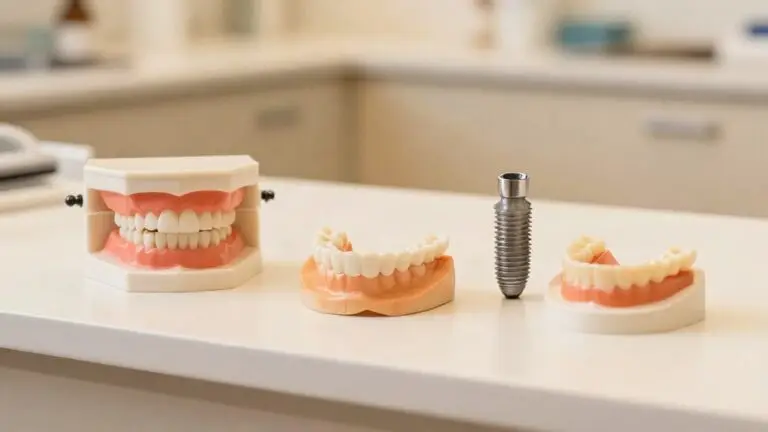
An implant is a titanium post that takes the place of a missing tooth root, topped with a custom crown. It stands alone, preserves the jawbone, and is designed to last. If your question is “how do I replace this tooth for good,” the implant is usually the answer.
Dentures and Implant-Supported Dentures
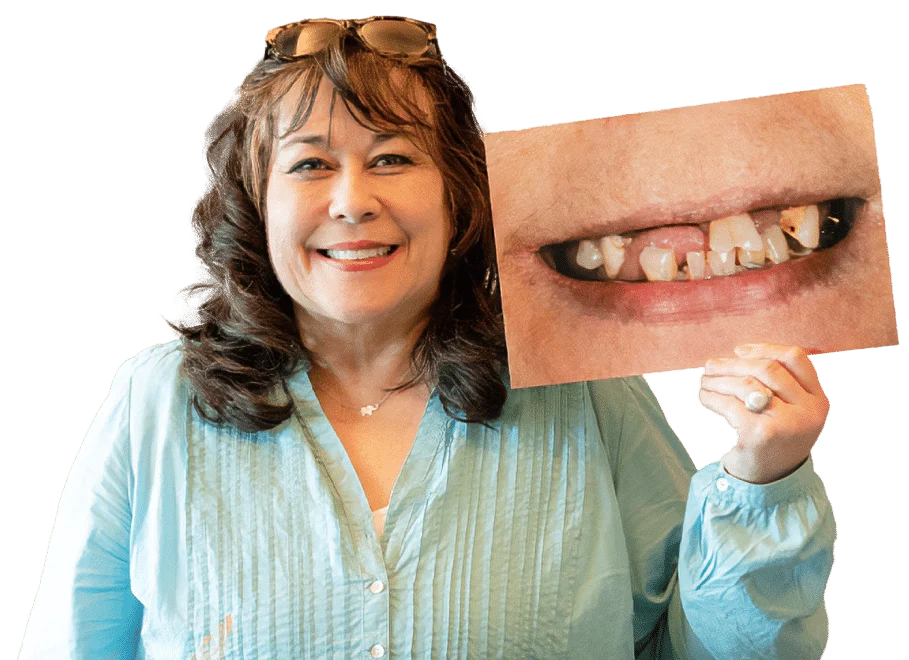
For multiple missing teeth, dentures replace a whole section or a full arch. Traditional dentures rest on the gums; implant-supported versions lock onto implants so they stay fixed and help protect bone. Many long-time denture wearers choose this upgrade and describe it as getting their life back.
Veneers and Cosmetic Add-Ons
Veneers are thin shells bonded to the front of teeth to improve their appearance. They are cosmetic rather than restorative – a great finish on a healthy smile, but not a substitute for repairing damage.
Full Mouth Reconstruction: When Several Fixes Work Together
Sometimes no single option covers it. Full mouth reconstruction combines several treatments – implants, crowns, bridges, even bite correction – into one coordinated plan to rebuild how your mouth works and looks. It is the most involved path, and usually the most life-changing, for patients who have been living with widespread dental problems.
How to Find Your Place on the Map
Ask yourself three questions: How many teeth need help? Is the tooth still there, or is it missing? How long do I want the result to last? Your answers point toward your options – and a consultation turns them into a real, priced plan.
Your Next Step
You do not need to know the terminology. You just need to know the outcome you want. Come to South Seattle Smiles and see what each option costs, or tell us the goal: I Want A New Smile. We will map the rest together.