Lower-Cost Alternatives to Dental Implants: What You Gain and Give Up
When patients hear what an implant costs, many quietly cross it off the list. It is the most expensive way to replace a tooth up front, and for anyone on a tight budget, that number can end the conversation before it starts.
But “not an implant” does not mean “no options.” There is a real range of lower-cost ways to fill a gap, and each one trades some durability or comfort for money saved today. Here is an honest look at what each alternative gains you – and what it gives up – so you can decide where on that trade-off you want to stand.
Why implants feel out of reach
An implant replaces the tooth root with a post that fuses to your jaw, then supports a crown. It involves a surgical step and a healing period, which is why it carries the highest starting price. Because the cost is front-loaded, it is easy to see the implant as the “expensive option” – even though, spread across decades, it is often the cheapest per year of use.
The trick to a fair comparison is not to ask “what is cheapest today?” but “what is the best value over the years I keep it?” Keep that lens on as you read the alternatives below.
Option 1: The dental bridge
A bridge caps the teeth on either side of your gap and fills the space with a false tooth. It is faster and usually cheaper than an implant up front, and it is fixed – it does not come out at night.
What you gain: lower upfront cost, a shorter treatment timeline, and a natural-looking result.
What you give up: the bridge rests on your neighboring teeth and puts extra stress on them, which can mean repairs down the road. It usually needs replacing every ten to fifteen years, and it does nothing to stop the jawbone under the gap from shrinking.
Option 2: The partial denture
A removable partial denture clips around your remaining teeth and fills the gap. It is typically the lowest-cost option of all.
What you gain: the smallest upfront price and a replacement for a gap without any surgery.
What you give up: it comes out for cleaning and sleeping, and it can slip while you eat or speak. It usually needs adjusting or remaking as your jaw changes over time, and because it does not stimulate the bone, it can allow bone loss to continue underneath.
Option 3: The implant-supported bridge
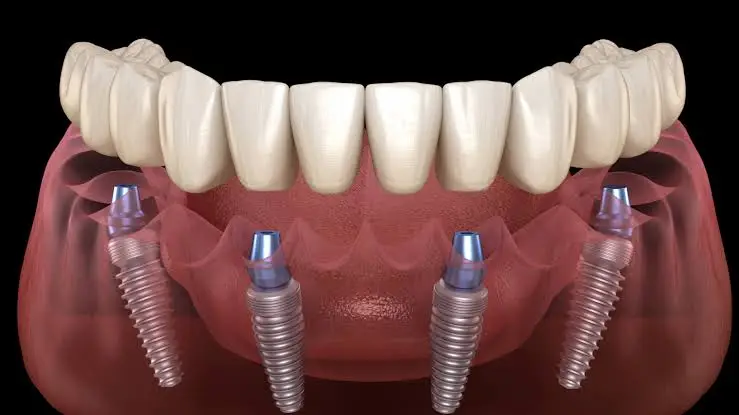
This one sits between the extremes. A bridge is anchored by one or more implants instead of by your natural teeth, so it does not lean on its neighbors.
What you gain: many of the benefits of implants – none of the stress on adjacent teeth – often at a lower total than replacing every missing tooth with its own implant.
What you give up: it still costs more up front than a traditional bridge or denture, and it still involves an implant step and a healing period.
Comparing upfront cost against lifetime upkeep
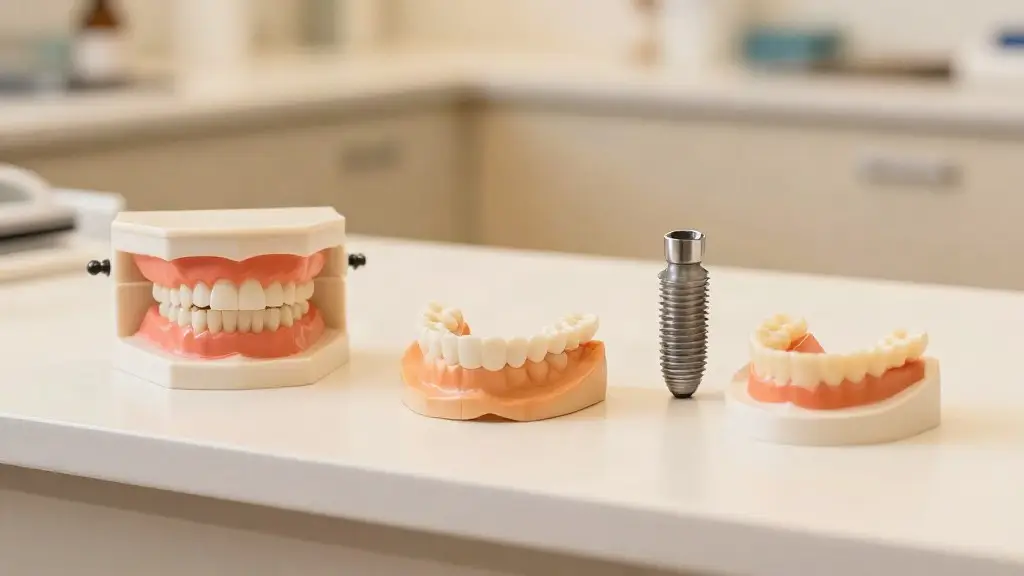
Line the options up and the pattern is consistent:
- Denture – lowest upfront, highest ongoing fuss: relines, remakes, and continued bone loss.
- Traditional bridge – low-to-moderate upfront, with scheduled replacement every ten to fifteen years and possible repair to the anchor teeth.
- Implant-supported bridge – higher upfront, less maintenance, no stress on neighboring teeth.
- Single implant – highest upfront, lowest lifetime maintenance, best long-term protection for bone and adjacent teeth.
The cheap options win the first year. The durable options win the first decade. Which one is “cheaper” depends entirely on how far you look – and that is the whole point.
How to choose without regret
If your budget truly cannot stretch to an implant right now, a bridge or partial denture can restore your smile and your ability to eat comfortably, and there is no shame in that. What matters is that you are choosing with your eyes open – knowing what your option will need, and roughly when.
Before you decide, ask:
- What is the full upfront cost, including every visit and any prep work?
- How long should this last, and what will it need along the way?
- What will that maintenance likely cost over ten or twenty years?
- Does this option protect my bone and my neighboring teeth, or stress them?
- Could financing make the longer-lasting option affordable month to month?
A good dentist will answer all five without steering you. If the higher-cost option is genuinely better for your mouth, you deserve to hear why – and if a lower-cost option is a sound fit for your situation, you deserve to hear that too.
If you are missing a tooth and worried about cost, do not assume the durable option is out of reach. Dr Lance Timmerman at South Seattle Smiles in Tukwila would be glad to lay out every alternative side by side, run your insurance and financing options, and help you find the option that fits both your mouth and your budget.